
AirEase HVAC Guide for Southeast Michigan Homes
Comparing AirEase equipment for a home in Washington Township or Southeast Michigan starts with the home: how much heating and cooling it needs, how air moves through the rooms, and which parts of the existing system can remain. A model number or efficiency rating cannot answer all of those questions.
This guide explains what to request in an AirEase proposal, how to compare furnace, air-conditioning and heat-pump options, and which documents help you check the proposed system. Use the AirEase product catalog as a starting point, then confirm the exact equipment and installation scope in a written proposal.
Start with the proposal document checklist, then use the guide to reading test records to separate a reported symptom, a measurement and a supported conclusion.
AirEase proposal document checklist
Use these eight records to compare proposals for the same home. Mark an item as received, still needed or not applicable, and ask who will supply it. These are documents to discuss with the contractor, not instructions to open or test equipment.
- Home and design basis. A load-calculation summary, the outdoor design conditions and the comfort problems the proposal is intended to address.
- Complete equipment schedule. Exact indoor and outdoor models, coil, controls, specified refrigerant and any components proposed to remain.
- Matched-system record. The applicable AHRI reference and ratings for the proposed combination, with any substitution resolved in writing.
- Air-path scope. Supply, return, filter and duct work included in the proposal, plus the airflow criteria to be checked.
- Cold-weather plan, when applicable. Heating capacity at the design condition, backup heat and the intended heat-pump or dual-fuel control strategy.
- Startup and handover record. Tests applicable to the equipment, measured results, comparison criteria and any unresolved or deferred checks.
- Complete work and price. Included electrical, venting, drainage, permits, removal and commissioning work; exclusions and the process for approving changes.
- Written coverage and care. Applicable warranty terms, registration responsibility, labor coverage, filter requirements and maintenance instructions.
If two proposals differ, identify the document or scope item that explains the difference before comparing their totals. An omitted item is a question to resolve, not proof that the equipment or contractor is unsuitable.
Check the proposed system match
A replacement proposal should identify the outdoor unit, indoor furnace or air handler, coil, thermostat and any duct changes. Replacing one component does not resolve every issue elsewhere in the system.
For an air-conditioning or heat-pump combination with an applicable AHRI rating, ask for the reference number and a copy of its record from the AHRI Directory. Compare the outdoor and indoor model designations with the proposal, including a furnace or air handler where the certified combination specifies one. Ask the contractor to explain any notation or model variation you cannot reconcile.
AHRI certification verifies published equipment performance ratings through independent testing. The certificate describes the equipment combination; it is not a record of the airflow, duct condition or comfort achieved in your home. Keep it alongside the installation and startup records.
For model-specific instructions and specifications, use AirEase’s official literature search. Before accepting a substitution, request the revised model list, applicable matched-system record and written explanation of any change in controls or installation scope.
Furnace repair, replacement and equipment choices
A repair diagnosis and an equipment proposal answer different questions. If the furnace is not heating correctly, start with furnace repair in Washington Township. A diagnosis can help establish what failed and whether repair is a practical option.
When comparing replacement options, ask how each proposed furnace’s heating output, blower, controls and installation requirements fit the home. Single-stage, two-stage and modulating operation describe different ways to deliver heat; a variable-speed blower is a separate feature. The proposal should explain the benefit of the particular combination without assuming every home needs the highest equipment tier.
AFUE describes furnace fuel efficiency. It does not describe duct losses, room-to-room comfort or the total cost of the installation. Review venting, drainage, electrical work and airflow along with the equipment rating. Our furnace replacement and installation guide is the service destination for Washington Township replacement planning, including AirEase and Ducane selection questions.
Cooling capacity, humidity and controls
For an air-conditioning replacement, describe the problem you want to solve: a failed unit, uneven room temperatures, uncomfortable humidity or noisy operation. Ask how the proposed capacity and controls address that problem and what duct or airflow work is included.
Compare the indoor and outdoor components together. A higher brochure rating does not by itself establish better comfort or a particular reduction in your bill. For diagnosis or replacement planning, use the existing Washington Township air-conditioning service page.
Heat pumps, dual fuel and Michigan conditions
A heat pump provides cooling and can also move heat indoors. A dual-fuel arrangement combines a heat pump with a fuel-burning furnace. The equipment and controls determine how those heating sources are used.
The NEEP cold-climate heat-pump sizing resources explain why equipment capacity must be checked against the home’s heating and cooling loads. An inverter compressor can vary its speed within its operating range. That is a different feature from a variable-speed indoor blower; ask which components and control functions the exact proposal includes.
An “all-climate” description is a starting point for questions, not a complete sizing answer. For a Southeast Michigan proposal, request the home’s heating load, the outdoor design condition used, the proposed heat pump’s capacity at that condition and the planned backup heat. A minimum operating temperature alone does not tell you whether the equipment can meet the home’s heating requirement there.
For dual fuel, ask how the controller selects the heating source and which settings will be recorded at handover. Operating-cost comparisons need the applicable gas and electric rates as well as equipment performance. Do not substitute a universal switch temperature or savings percentage for that comparison.
For ducted or ductless arrangements, document which rooms need conditioning, the usable ductwork, indoor-unit placement, drainage and service access. Confirm the model’s capabilities in its own literature; no feature in this guide establishes that every AirEase model has it.
Read efficiency ratings and refrigerant information carefully
SEER2 describes seasonal cooling efficiency, EER2 describes cooling efficiency at a specified test condition, and HSPF2 describes seasonal heat-pump heating efficiency. AHRI explains these efficiency metrics. Use the appropriate metric and the actual matched-system rating when comparing proposals.
Ask the contractor to identify the refrigerant specified for the exact equipment. If a proposal specifies R-454B, request the applicable manufacturer’s installation instructions and an explanation of any required detection components, controls and startup checks. Do not assume a feature listed for one AirEase model applies to every model or to existing equipment.
Size the equipment and check the air path
A load calculation considers the home’s construction, insulation, windows, air leakage and local design conditions. ACCA Manual J provides the residential load-calculation method. Ask what information was used instead of relying only on floor area or the size of the old equipment.
The duct system also needs to support the proposed airflow. Request a review of the supply and return paths, filter arrangement and measured static pressure, interpreted against the equipment’s published limits and blower data. A pressure reading needs that context; it is not a complete diagnosis by itself.
If rooms are uncomfortable or air movement is noisy, describe where and when it happens. Our air-duct installation and repair page is the existing destination for ductwork concerns. Any filter, humidity or air-cleaning addition should be evaluated as part of the system, including its effect on airflow.
Ask what will be checked at startup
ENERGY STAR’s quality-installation guidance emphasizes sizing, airflow, refrigerant charge and duct performance. NIST’s installation-fault research explains why installation details can affect equipment performance.
Ask which checks apply to the proposed equipment and what results you will receive. A useful commissioning record identifies:
- The installed equipment and control settings.
- The airflow and static-pressure checks, with the equipment criteria used.
- Refrigerant-side checks performed according to the applicable instructions.
- For a furnace, the applicable fuel, combustion, venting and drainage checks.
- Any remaining work, the filter requirements and the operating instructions.
These are questions to settle in the installation scope. They do not establish that measurements have already been taken at your home.
How to read a diagnostic or commissioning record
A useful record keeps five parts separate. Use this sequence to ask what is known, how it was established and what still needs checking.
- Observation
- What was reported or seen, where it occurred and when. A cold room, unusual noise or frozen line is a symptom; record it without assigning a cause yet.
- Measurement
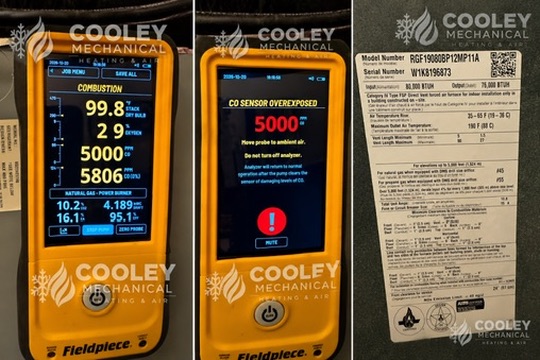
- The actual reading, unit, test location, operating mode and relevant conditions. Identify the equipment and the manufacturer’s criteria used for comparison. A photograph of an instrument without that context is incomplete evidence.
- Diagnosis
- The technician’s explanation of how the findings support a cause, including other possibilities that were checked or remain unresolved. A static-pressure reading needs the test locations, equipment limits and airflow context; it does not name a failed component by itself.
- Recommendation
- The proposed action and why it follows from the findings. Distinguish a necessary repair from an optional comfort improvement or a replacement alternative.
- Outcome
- The work actually completed, the retest results and the remaining limitations. A proposed repair is not a completed repair; an immediate retest is not evidence of season-long savings or comfort.
Ask the technician to explain gaps in the record. Homeowners should not remove panels, drill test ports, bypass controls or handle refrigerant to complete this checklist. The framework describes evidence to request; it does not report a completed Cooley installation.
Compare written installation scope and payment terms
Compare proposals that describe the same work. Equipment, duct modifications, venting, drainage, electrical changes, controls, permits, removal and commissioning can all affect the installation scope. Ask which items are included and how unexpected work would be approved.
For a furnace comparison involving AirEase and Ducane, use the same requirements for sizing, airflow, installation and documentation. Compare the proposed features and written price without assuming the brand name alone establishes comfort, reliability or value.
Review Cooley Mechanical’s financing information for the current payment-information destination. Any financing terms belong in the applicable offer. Do not treat a manufacturer’s promotion or an incentive mentioned in an older article as part of your proposal; request the current written terms before including it in a budget.
Check warranty terms and plan maintenance
Start with AirEase’s warranty information, then obtain the document that applies to the exact product and installation. Ask who completes registration, what deadlines apply, what parts and labor coverage are included, and how a future service claim would be handled. The written terms control; this guide does not promise a particular coverage period. For a plain-language overview of parts, labor, registration and unit-replacement terms, read Cooley Mechanical’s HVAC warranty guide.
Keep model numbers, installation documents and service records together. Follow the applicable filter and maintenance instructions and report changes in comfort, noise or operation. ENERGY STAR’s replacement guidance can help frame repair-versus-replacement questions, but age alone does not diagnose a failure or establish remaining equipment life.
Questions to ask before choosing AirEase equipment
Does a higher efficiency rating guarantee a lower bill?
No specific bill reduction can be established from the rating alone. Compare the actual equipment combination, installation scope, home conditions, usage and energy rates.
Should I replace the furnace and air conditioner together?
Ask whether the existing components can remain compatible with the proposed equipment and whether separate or combined work better addresses their condition and the installation requirements. A complete replacement should have a documented reason.
Is dual fuel the right choice for every Michigan home?
No. The decision depends on the home’s heating needs, equipment performance, available fuels, energy rates and controls. Ask for a comparison based on those details.
Which thermostat should be included?
The proposal should identify a control compatible with the exact equipment and explain which functions it supports. Do not assume an existing thermostat can operate every proposed feature.
How can I compare AirEase and Ducane furnace proposals?
Compare the load calculation, equipment specifications, duct and venting work, controls, startup checks and written coverage alongside the price. Keep the installation requirements consistent so you can understand what changes between options.
What should I have ready for an assessment?
Share the service address, the rooms or symptoms involved, existing equipment information if available, repair history and your priorities. The assessment establishes which options fit; the article does not replace an inspection.
Plan the next step for your home
Washington Township is Cooley Mechanical’s public base. Macomb, Oakland and Lapeer are the primary service counties; check service availability by county for other locations. For help choosing the appropriate service, see HVAC services in Washington Township.
Request an HVAC assessment and describe what you want to improve. Requests may be submitted at any time; service and appointments are subject to availability and confirmation.