
AirEase HVAC Systems Guide for Southeast Michigan Homeowners (Comfort, Efficiency, Value)
For homeowners in Washington Township, Macomb County, Oakland County, and surrounding Southeast Michigan communities, HVAC replacement is rarely just about swapping one metal box for another. The right system has to handle humid July afternoons, cold January nights, shoulder-season temperature swings, basement installations, older ductwork, and utility costs that never seem to move in the right direction.
AirEase residential HVAC products are worth considering because the brand offers a broad lineup that can be matched to different budgets and comfort goals: high-efficiency Pro Series™ systems, gas furnaces, central air conditioners, heat pumps, dual-fuel pairings, air handlers, evaporator coils, packaged units, thermostats, and mini-split options. The best choice depends less on brand name alone and more on whether the equipment is properly sized, matched, installed, commissioned, and maintained.
This guide explains how AirEase fits into a smart replacement plan for Southeast Michigan homes, what the product tiers mean, how efficiency ratings work, what to ask your contractor, and how to compare AirEase objectively with other leading HVAC brands.

Why Southeast Michigan homeowners should think in “systems,” not just equipment
A residential HVAC system is a collection of parts that must work together. A common split system in Macomb or Oakland County may include:
- An outdoor air conditioner or heat pump
- An indoor gas furnace or air handler
- An evaporator coil
- A thermostat or communicating control
- Ductwork, return air pathways, registers, and grilles
- Filtration, humidification, UV, or air purification accessories
- Refrigerant lines, condensate drainage, electrical connections, and venting
AirEase’s official residential lineup reflects this whole-system approach, with categories for Pro Series systems, air conditioners, heat pumps, gas furnaces, packaged units, air handlers, coils, thermostats, and related support resources. (airease.com)
That matters locally because Southeast Michigan homes vary widely. A 1960s ranch in Warren, a colonial in Washington Township, a lake-area home in Oakland County, and a newer build in Macomb Township may all need different airflow, duct modifications, humidity control, and heating capacity. A premium outdoor unit cannot overcome undersized returns, a poorly selected coil, excessive static pressure, or a furnace that is too large for the home.
AirEase at a glance: comfort, efficiency, reliability, and value
AirEase is positioned as a value-conscious residential HVAC brand with several higher-feature options. It is part of Allied Air Enterprises, which is identified in AirEase’s site footer as a Lennox International Inc. company. (airease.com)
For homeowners researching HVAC replacement in Southeast Michigan, the practical appeal is balance:
- Comfort: Options include variable-capacity cooling, two-stage heating, variable-speed blowers, communicating controls, zoning compatibility, and humidity control.
- Efficiency: Current AirEase models list SEER2, HSPF2, and AFUE ratings across the lineup, with high-efficiency furnaces up to 98% AFUE, air conditioners up to 22 SEER2, and heat pumps up to 21 SEER2 and 10 HSPF2 in the ducted lineup. (airease.com)
- Reliability features: AirEase highlights Omniguard® Total Corrosion Protection Technology on many coils and outdoor products, plus product-specific compressor protection, internal monitoring, and RDS features on newer refrigerant equipment. (AirEase Omniguard corrosion-protection details)
- Value: The brand includes both advanced Pro Series products and more straightforward single-stage systems, giving homeowners multiple price and performance levels rather than a one-size-fits-all recommendation.
The key is choosing the AirEase system that fits your home, not automatically buying the most expensive or the cheapest model.
Pro Series™ systems: AirEase’s high-comfort platform
AirEase Pro Series™ systems are designed around integrated, higher-performance components. The current Pro Series page highlights variable-speed comfort, more even temperatures, humidity management, indoor air quality features, quieter operation, and communicating control capabilities. AirEase lists current Pro Series products including the A7AC22V air conditioner, A7CP21V and A7HP19V heat pumps, A98MVK, A972VK, and A802VK gas furnaces, the 7AH2AV air handler, and communicating thermostat options including Comfort Sync A3 and MyHomeComfort CA4. (airease.com)
For a homeowner in Washington Township or Oakland County, a Pro Series system may make sense if you want:
- Better temperature consistency from room to room
- Longer, quieter cycles instead of frequent on/off operation
- More precise humidity control in summer
- Better comfort during mild spring and fall weather
- Smart communicating diagnostics and system coordination
- Potential compatibility with zoning and advanced IAQ accessories
Pro Series equipment is not automatically the best value for every home. If your ductwork is restrictive, if you plan to sell soon, or if you simply want dependable basic heating and cooling, a well-installed single-stage or two-stage AirEase system may be the more practical choice. But when the home can support it and comfort is a priority, Pro Series gives AirEase a competitive high-efficiency offering.
Gas furnaces: the backbone of many Southeast Michigan systems
Natural gas furnaces remain common in Macomb County and Oakland County because they provide strong heating output during cold weather. AirEase offers several gas furnace options, including modulating, two-stage, and single-stage models.
The official AirEase gas furnace lineup includes:
- A98MVK: Up to 98% AFUE, Pro Series, modulating heat, Comfort Sync enabled, ENERGY STAR certified, and Refrigerant Detection System listed.
- A972VK: Up to 97% AFUE, Pro Series, variable-speed motor, Comfort Sync enabled, ENERGY STAR certified, and RDS listed.
- A972EK: Up to 97% AFUE, two-stage heating, constant-torque motor, ENERGY STAR certified, and RDS listed.
- A802VK: 80% AFUE, Pro Series, two-stage heating, variable-speed fan motor, Comfort Sync A3 enabled, and RDS listed.
- A961EK: 96% AFUE, single-stage heating, constant-torque motor, ENERGY STAR certified, and RDS listed.
- A931EK, A802EK, and A801EK: Additional 93% and 80% AFUE options with constant-torque blower configurations and RDS listed in the current lineup. (airease.com)
80% vs. 90%+ AFUE in plain English
AFUE stands for Annual Fuel Utilization Efficiency. A 96% AFUE furnace converts about 96% of its fuel into usable heat under standardized rating conditions, while an 80% AFUE furnace vents more heat out of the flue.
In Southeast Michigan, high-AFUE condensing furnaces are often attractive because winters are long enough for heating efficiency to matter. However, installation details affect cost. A 90%+ furnace typically needs PVC intake and exhaust venting and a condensate drain. In some homes, especially older finished basements or tight mechanical rooms, vent routing can influence the project cost.
Single-stage, two-stage, modulating, and variable-speed furnaces
- Single-stage heat: Either off or on at full capacity. Lower upfront cost, simple operation, more temperature swing.
- Two-stage heat: Runs at a lower stage most of the time and a higher stage when needed. Better comfort and quieter operation than single-stage.
- Modulating heat: Adjusts heating output in smaller increments. Best comfort potential, especially with compatible communicating controls.
- Variable-speed blower: Adjusts airflow more precisely, supports better filtration and humidity control, and can improve comfort when matched correctly.
For many Southeast Michigan homes, a two-stage variable-speed furnace is a strong middle-ground option. For homeowners who want the highest comfort and have the budget, a modulating Pro Series furnace can be a premium fit.
Air conditioners: from dependable single-stage to variable-capacity cooling
AirEase’s current air conditioner lineup includes the Pro Series A7AC22V, plus single-stage A7AC14F and A7AC13F models. AirEase lists the A7AC22V at up to 22.0 SEER2 with true variable-capacity cooling, Comfort Sync A3 capability, Omniguard protection, and 2025 refrigerant compliance. The A7AC14F is listed at 14.3 SEER2 and up, while the A7AC13F is listed at 13.4 SEER2 and up and noted as available only in the Northern U.S. and Canada per government regulations. (airease.com)
For Southeast Michigan homeowners, the decision often comes down to comfort expectations:
- A basic single-stage AC can be a good value when the existing ductwork is sound, the home has normal cooling needs, and the homeowner wants lower upfront cost.
- A higher-efficiency single-stage AC can reduce electric use compared with older equipment, but it still cycles on and off at one output level.
- A variable-capacity AC can run longer at lower output, which can improve temperature stability, reduce noise, and help with humidity control during muggy Michigan summer days.
Remember: SEER2 is not the only number that matters. Proper airflow, refrigerant charge, coil match, duct sealing, and thermostat setup determine whether the rated performance shows up in your home.
Heat pumps and dual-fuel systems: increasingly relevant in Michigan
Heat pumps provide both cooling and heating by moving heat rather than creating it through combustion. In summer, they work like an air conditioner. In winter, they extract heat from outdoor air and move it indoors.
AirEase’s ducted heat pump lineup includes:
- A7CP21V: Up to 21 SEER2 and 10 HSPF2, ENERGY STAR Most Efficient, cold climate technology, Comfort Sync A3 enabled, Omniguard protection, dual-fuel compatible, low-GWP refrigerant.
- A7HP19V: Up to 19 SEER2 and 8.5 HSPF2, true variable-speed compressor, ENERGY STAR certified, Omniguard protection, MHT™ Technology, dual-fuel compatible.
- A7SCP18V: Up to 19.0 SEER2 and 10.0 HSPF2, ENERGY STAR Most Efficient, all-climate technology, easier compatibility with existing indoor equipment, and dual-fuel compatibility.
- A7HP14F: Up to 16.2 SEER2 and 7.5 HSPF2, ENERGY STAR certified, Omniguard protection, MHT Technology, single-stage compressor, and dual-fuel compatibility. (airease.com)
What is a dual-fuel system?
A dual-fuel system pairs an electric heat pump with a gas furnace. The heat pump handles cooling and provides efficient heating during milder winter conditions. The gas furnace takes over when outdoor temperatures drop below the economic or comfort balance point.
In Southeast Michigan, this can be a practical compromise for homeowners who want:
- High-efficiency cooling
- Lower gas usage during mild heating weather
- Strong backup heat during cold snaps
- Flexibility as utility rates change
- A path toward partial electrification without giving up gas heat
The balance point should be configured based on your equipment, home heat loss, local electric and gas rates, comfort preferences, and utility program rules. Guessing can reduce savings.
Air handlers, evaporator coils, and why matching matters
Air handlers are used with heat pumps and electric HVAC systems to move conditioned air through the home. AirEase lists variable-speed and constant-torque air handlers, including Pro Series 7AH2AV, variable-speed 7AH1AV, and several constant-torque and compact models. The 7AH2AV is listed with a variable-speed fan motor, Omniguard protection, Comfort Sync A3 compatibility, a factory-installed Refrigerant Detection System, two-piece cabinet design, low-GWP compatibility, and Pro Series designation. (airease.com)
Evaporator coils are equally important. AirEase’s coil lineup includes cased and uncased models such as 7EC, 7EH, 7ED, 7EC-01, 7ED-01, 7EH-01, 7EU, and others. AirEase emphasizes properly sized coils, factory-installed TXVs on many models, anti-microbial drain pans, MHT Technology, and Omniguard corrosion protection. Some current R-454B coils list factory-installed Protection Pro™ RDS. (airease.com)
A mismatched or poorly installed coil can reduce efficiency, cause comfort problems, create condensate issues, or prevent the system from achieving its AHRI-rated performance. When reviewing quotes, ask for the exact outdoor unit, indoor furnace or air handler, coil model, and AHRI match where applicable.
Packaged units: less common, but useful in certain applications
Packaged units combine heating and cooling components into one outdoor cabinet. They are more common in certain home designs, additions, manufactured housing, light commercial-like residential applications, and situations where indoor mechanical space is limited.
AirEase packaged units include gas/electric, heat pump, and air conditioner configurations. The current lineup lists models such as RPGE15, RPHP15, PRPGE16, PRPHP16, PRPAC16, RPGE13, RPHP13, RPAC13, PRPGE14, PRPHP14, and PRPAC14. Efficiency ratings shown include up to 15.2 SEER2 and 81% AFUE for some gas/electric units, up to 15.22 SEER2 and 6.7 HSPF2 for certain packaged heat pumps, and 13.4 SEER2 options in standard-efficiency packaged models. (airease.com)
For most Washington Township, Macomb County, and Oakland County homes with basements or mechanical rooms, a split system is more typical. But packaged units remain worth knowing about if your home’s layout requires them.
Mini-split systems: where they fit
AirEase product literature includes mini-split systems for spaces where ductwork is impractical. Exact model availability, matched indoor and outdoor components, efficiency, sound ratings, low-temperature performance, and configuration should be verified in the current product literature and proposal. (AirEase mini-split product literature)
Mini-splits are not always the best whole-home answer for a ducted Michigan home, but they can solve specific comfort problems without replacing the entire duct system. They also avoid some losses associated with ducts, but placement, line-set length, condensate management, service access, and winter performance all matter.
Comfort Sync® A3 and smart communicating controls
Controls are where many homeowners notice the difference between a basic system and a premium system. AirEase currently lists both the Comfort Sync A3 and MyHomeComfort CA4 as Pro Series-compatible thermostat options. AirEase describes the Comfort Sync A3 as a connected Pro Series control with zoning and humidity control, adaptive scheduling, an intuitive touchscreen, and use of the MyHomeComfort app. (airease.com)
The value of a communicating thermostat is that it can coordinate compatible components rather than simply turning them on and off. In the right system, that can help manage staging, airflow, humidity, diagnostics, and zoning.
That said, not every home needs communicating controls. If you choose a basic single-stage system, a quality smart thermostat from another brand may be perfectly adequate. If you choose Pro Series variable-capacity equipment, use the manufacturer-approved communicating control so the system can operate as designed.
Efficiency ratings explained: AFUE, SEER2, EER2, and HSPF2
HVAC efficiency ratings can be confusing because they measure different things.
- AFUE: Furnace heating efficiency. Higher means more fuel is converted into usable heat.
- SEER2: Seasonal cooling efficiency for air conditioners and heat pumps under updated test procedures.
- EER2: Cooling efficiency at a specific test condition, useful for understanding performance in hotter weather.
- HSPF2: Seasonal heating efficiency for heat pumps under updated test procedures.
AHRI notes that, effective January 1, 2023, residential air conditioner and heat pump efficiency metrics are expressed as SEER2, EER2, and HSPF2. (AHRI 2023 efficiency standards) AirEase’s efficiency standards page similarly explains that SEER2, HSPF2, and EER2 were introduced to better reflect performance under newer testing standards. (AirEase HVAC efficiency standards)
A higher rating can reduce operating cost, but the highest-rated model is not always the best financial choice. In Southeast Michigan, look at:
- Your current equipment age and utility bills
- Whether you use gas, electric, or dual fuel for heating
- How long you plan to stay in the home
- Whether rebates apply
- Whether ductwork upgrades are needed
- Whether premium comfort is worth the extra cost to you
R-454B, low-GWP equipment, and Refrigerant Detection Systems
The HVAC industry has been transitioning to lower-GWP refrigerants. AirEase’s low-GWP resource states that starting in 2025, EPA guidelines are reducing the global warming potential of refrigerants used in residential heating and cooling systems, and AirEase notes that new units come with updated sensors for added peace of mind. (airease.com)
Many current AirEase R-454B-compatible products list Refrigerant Detection System or RDS features. For example, current AirEase furnace, air handler, coil, and packaged unit pages list RDS on multiple models. (airease.com)
For homeowners, the practical takeaway is simple: make sure your contractor is trained on A2L refrigerants, follows manufacturer instructions, installs required sensors and controls correctly, and verifies system operation at startup.
Omniguard® corrosion protection: what it is and why it matters
AirEase describes Omniguard Total Corrosion Protection Technology as a combination of advanced materials and a proven tube-and-fin design intended to improve corrosion protection compared with traditional coils. AirEase lists Omniguard across air conditioners, heat pumps, air handlers, and coils. (AirEase Omniguard corrosion-protection details)
Corrosion protection can be valuable in real homes because coils are exposed to moisture, cleaning products, household VOCs, road salt residue, landscaping chemicals, and changing humidity conditions. Omniguard should not be treated as a substitute for maintenance, proper drainage, or good airflow, but it is a useful durability feature to compare when reviewing equipment options.
IAQ compatibility: filters, humidifiers, UV lights, and purification
Indoor air quality matters in Southeast Michigan because homes are closed up for much of the winter and often tightly conditioned in summer. AirEase systems can be paired with common IAQ upgrades when the duct system and blower are selected properly.
Common IAQ options include:
- Media filters: Better particle capture than a basic 1-inch filter, but they must be sized to avoid airflow restriction.
- Whole-home humidifiers: Useful during dry Michigan winters, especially with forced-air gas furnaces.
- UV lights: Often installed near the indoor coil to help control microbial growth on wet surfaces.
- Air purification systems: Can target particulates, odors, or certain airborne contaminants depending on technology.
- Ventilation upgrades: May be needed in tighter homes to bring in fresh air in a controlled way.
Be careful with “more filtration is always better” thinking. A very restrictive filter in an undersized return can raise static pressure, reduce airflow, freeze coils, trip limits, or shorten equipment life. IAQ upgrades should be included in the airflow design, not added as an afterthought.

Proper sizing: why Manual J matters more than rules of thumb
The most important step in a quality HVAC replacement is proper sizing. ACCA identifies Manual J 8th Edition as the ANSI-recognized standard for residential heating and cooling load calculations for homes, townhomes, condos, and similar dwellings. (acca.org)
A true load calculation considers factors such as:
- Home size and layout
- Insulation levels
- Window type, size, and orientation
- Air leakage
- Ceiling height
- Basement conditions
- Occupancy and internal gains
- Local outdoor design temperatures
- Duct location and duct losses
Oversizing is common in replacement work because contractors sometimes match the old equipment or use square-foot rules. That can create short cycling, uneven temperatures, poor dehumidification, noisy airflow, and unnecessary cost. Undersizing can leave the home uncomfortable during extreme weather. The right answer is to calculate the load, select equipment according to manufacturer performance data, and confirm the duct system can move the required air.
Commissioning: where good systems become great systems
Brand matters, but commissioning often matters more. ENERGY STAR notes that poor airflow can reduce efficiency, increase utility bills, reduce comfort, increase indoor humidity, and shorten equipment life; it also recommends that contractors test and adjust refrigerant charge and inspect duct systems. (ENERGY STAR HVAC quality-installation guidance) NIST has also reported that common installation faults include leaky ducts, improper refrigerant charge, oversizing, and restricted airflow, all of which can increase energy use. (NIST research on HVAC installation faults)
A quality AirEase installation should include:
-
Load calculation and equipment selection
- Manual J principles
- Correct furnace, AC, heat pump, coil, and blower match
- AHRI match verification when applicable
-
Duct and airflow review
- Return and supply sizing
- Static pressure measurement
- Filter cabinet sizing
- Register and grille evaluation
- Duct sealing or redesign when needed
-
Refrigerant-side commissioning
- Proper evacuation
- Manufacturer-approved line-set practices
- Charge verification using the specified method
- Temperature and pressure readings documented
-
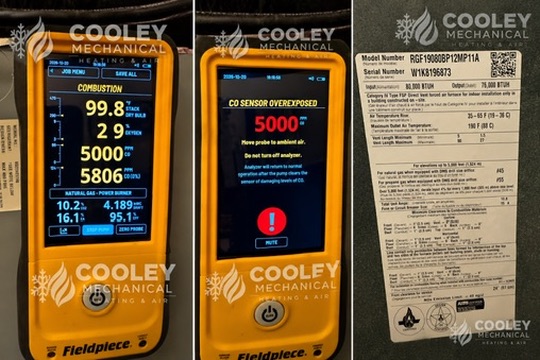
Combustion and venting checks for furnaces
- Gas pressure
- Combustion analysis when appropriate
- Venting slope and termination
- Condensate drainage for high-efficiency furnaces
-
Controls setup
- Staging or communicating configuration
- Heat pump lockout and dual-fuel balance point
- Humidity settings
- Wi-Fi/app setup if requested
-
Homeowner handoff
- Filter size and replacement schedule
- Thermostat training
- Warranty registration guidance
- Maintenance recommendations
If a contractor cannot explain these steps, the issue is not the brand. It is the installation process.
Typical installation costs and financing considerations
AirEase states that, like other major HVAC manufacturers, it does not publish product pricing online because geography, installation cost, ductwork needs, and equipment sizing all affect the final price. (airease.com) National cost sources show broad HVAC replacement ranges: HomeAdvisor lists HVAC installation or replacement commonly between $5,000 and $12,500, while HomeGuide lists HVAC replacement around $5,000 to $11,000 and installation with ductwork around $7,000 to $16,000. (homeadvisor.com)
For Southeast Michigan homeowners, a realistic installed price can vary based on:
- Furnace efficiency and venting complexity
- AC vs. heat pump vs. dual-fuel configuration
- Single-stage, two-stage, or variable-capacity equipment
- Electrical upgrades for heat pumps or air handlers
- Ductwork repairs, sealing, or resizing
- Filter cabinet, humidifier, UV, or purification add-ons
- Thermostat and zoning requirements
- Permit, disposal, and code-related work
- Labor quality, warranty support, and commissioning time
AirEase also notes that financing may be available through local independent dealers, with features such as flexible payment options, competitive interest rates, no down payment in some programs, no prepayment penalties, and low monthly payments depending on the financing offer. (airease.com)
Rebates, tax credits, and local incentives
Incentives change frequently, so verify them at quote time. In Michigan, DTE and Consumers Energy both publish residential HVAC rebate information, and Michigan’s Home Energy Rebates program supports eligible energy-efficiency and electrification upgrades, including heat pumps in certain circumstances. (DTE furnace rebates) Federal tax rules also change, and the IRS maintains current guidance for the Energy Efficient Home Improvement Credit and qualifying HVAC equipment. (IRS Energy Efficient Home Improvement Credit guidance)
Ask your contractor to provide model numbers, AHRI certificates, and rebate documentation before you sign, not after installation.
Warranty coverage and registration
AirEase’s warranty page states that heating equipment is eligible for a 10-year parts warranty and limited lifetime heat exchanger warranty, and that other products are eligible for a 10-year parts warranty. AirEase also states that products must be registered within 60 days of purchase, or coverage defaults to a 5-year limited parts warranty and a 20-year limited heat exchanger warranty. (airease.com)
Warranty terms vary by model, application, registration status, installation date, and full warranty documents. Labor coverage is typically separate unless included by the installing contractor or purchased as an extended labor plan. When comparing proposals, ask:
- Who registers the equipment?
- What is the parts warranty?
- What is the heat exchanger or compressor warranty?
- Is labor included, and for how long?
- Is an extended labor warranty available?
- Are annual maintenance records required?
- What happens if the home is sold?
Objective brand comparison: AirEase vs. other leading HVAC brands
AirEase should be compared as part of a full installed system, not as a nameplate alone.
AirEase compared with premium national brands
Brands such as Carrier, Trane, Lennox, American Standard, and Bryant often have broad dealer networks, premium communicating systems, advanced inverter options, and strong brand recognition. They may also carry higher installed prices depending on the dealer and model. AirEase can be attractive when a homeowner wants many similar comfort categories—two-stage, variable-speed, communicating, high-AFUE, and inverter-style options—while still shopping for value.
AirEase compared with value-oriented brands
Brands such as Goodman, Amana, Rheem, Ruud, York, and others compete in similar value and midrange categories. AirEase’s advantages may include specific dealer support, Pro Series system integration, Omniguard coil protection, and certain warranty options. Another brand may be the better fit if it has stronger local dealer support, a more suitable model match, better availability, or a contractor you trust more.
AirEase compared with ductless specialists
For mini-splits, brands such as Mitsubishi, Fujitsu, Daikin, LG, and Gree are often known for deep ductless portfolios. AirEase mini-splits can still make sense for homeowners who want their ductless solution installed and serviced by an AirEase dealer, but a ductless-focused brand may offer more indoor-unit styles or application-specific options.
The honest bottom line
No major HVAC brand is automatically superior in every home. A properly sized, well-commissioned AirEase system can outperform a poorly installed premium-brand system. Likewise, an incorrectly applied AirEase system can disappoint. Compare the contractor, design process, commissioning checklist, warranty support, and service reputation as carefully as the equipment badge.
Maintenance recommendations and expected lifespan
ENERGY STAR suggests considering replacement when a heat pump or air conditioner is more than 10 years old or a furnace is more than 15 years old, especially if repairs and energy bills are increasing or comfort is declining. (energystar.gov) In real-world Southeast Michigan homes, many systems last longer with good maintenance, while neglected or poorly installed systems may fail earlier.
Recommended maintenance includes:
- Replace or clean filters on schedule.
- Keep outdoor units clear of leaves, cottonwood, shrubs, snow buildup, and debris.
- Schedule professional cooling maintenance before summer.
- Schedule professional furnace maintenance before heating season.
- Confirm condensate drains are clear.
- Have refrigerant charge and airflow checked when performance changes.
- Keep supply and return vents open and unobstructed.
- Maintain humidifier pads and water panels.
- Clean mini-split filters regularly if installed.
- Save maintenance records for warranty and resale documentation.
A general planning range is 12 to 18 years for central air conditioners and heat pumps, and 15 to 25 years for gas furnaces, depending on installation quality, runtime, maintenance, environment, and repair history. If your system is near the end of that range and needs a major repair, replacement may provide better long-term value.
FAQs for Southeast Michigan homeowners
Is AirEase a good HVAC brand?
AirEase can be a good choice when installed by a qualified contractor who sizes, matches, and commissions the system properly. The lineup includes basic, midrange, and higher-comfort Pro Series options, so the right answer depends on your home and budget.
Is AirEase the same as Lennox?
AirEase is part of Allied Air Enterprises, which AirEase identifies as a Lennox International Inc. company. It is not the same product line as Lennox-branded residential equipment, but the corporate relationship is relevant when researching manufacturer background. (airease.com)
Should I choose a furnace and AC or a heat pump?
If your current system is gas furnace plus AC, replacing both with a high-efficiency furnace and AC is straightforward. A heat pump or dual-fuel system may be worth considering if you want efficient shoulder-season heating, potential rebates, or future fuel flexibility.
Are dual-fuel systems good for Michigan?
They can be. A dual-fuel system lets the heat pump run during milder weather and the gas furnace take over in colder conditions. The value depends on equipment performance, utility rates, balance-point setup, and installation quality.
Is variable-capacity worth it?
Variable-capacity systems are usually quieter and more consistent, with better humidity control potential. They cost more upfront and require proper controls and setup. They are most worthwhile for homeowners who plan to stay in the home and value comfort.
Do I need the Comfort Sync A3 thermostat?
If you choose compatible Pro Series communicating equipment, Comfort Sync A3 or another approved communicating control helps unlock the system’s intended features. For simpler non-communicating equipment, a standard smart thermostat may be enough.
What is RDS on AirEase equipment?
RDS stands for Refrigerant Detection System. On current low-GWP refrigerant equipment, RDS helps address safety requirements related to newer refrigerants. Your contractor should install and test it according to AirEase instructions.
How important is Omniguard?
Omniguard is a useful corrosion-protection feature on many AirEase coils and outdoor units. It may help durability, but it does not replace proper maintenance, drainage, airflow, and installation practices.
Should I replace the furnace and AC at the same time?
Often, yes—especially if both are old, if you want a matched high-efficiency system, or if the indoor blower and coil are not compatible with the new outdoor unit. However, if one component is newer and compatible, staged replacement may be reasonable.
What should I ask for in an AirEase quote?
Ask for model numbers, efficiency ratings, AHRI match information, warranty terms, labor coverage, ductwork recommendations, Manual J sizing, static pressure testing, commissioning steps, rebate documentation, and thermostat options.
Final guidance: choose the right AirEase system the right way
AirEase residential HVAC products offer a practical balance of comfort, efficiency, reliability, and value for homeowners researching HVAC replacement in Washington Township, Macomb County, Oakland County, and surrounding Southeast Michigan communities. The lineup is broad enough to support basic replacements, high-efficiency furnace and AC systems, heat pump upgrades, dual-fuel strategies, Pro Series communicating systems, packaged units, air handlers, coils, IAQ accessories, and mini-split applications.
The smartest path is to start with the home—not the equipment brochure. Get a proper load calculation, evaluate ductwork, decide how much comfort and efficiency matter to you, compare installed value rather than model price alone, and choose a contractor who documents commissioning. When the design and installation are right, an AirEase system can be a strong long-term comfort investment for a Southeast Michigan home.
Ready to compare replacement options? Schedule an in-home HVAC consultation and ask for AirEase system recommendations matched to your home, comfort goals, utility setup, and budget.